Modern Hybrid CMS

The AI-Powered Laravel CMS for Editors and Developers

Empower your editorial team with intuitive visual WYSIWYG editing and built-in AI assistance, while developers build freely on native Laravel architecture with typed APIs and zero vendor lock-in.

PagibleAI's Powerful Features for Editors

eye-check.svg

Edit content easily with WYSIWYG

Experience seamless content creation with a full WYSIWYG editor for immediate content preview.

arrow-all.svg

Work efficiently with your content

Intuitive drag&drop of pages and content elements allows efficient reordering and simplifies management.

languages.svg

Native Multilingual Admin Interface

Manage content comfortably in your preferred language with complete support for 35+ backend translations and RTL layouts.

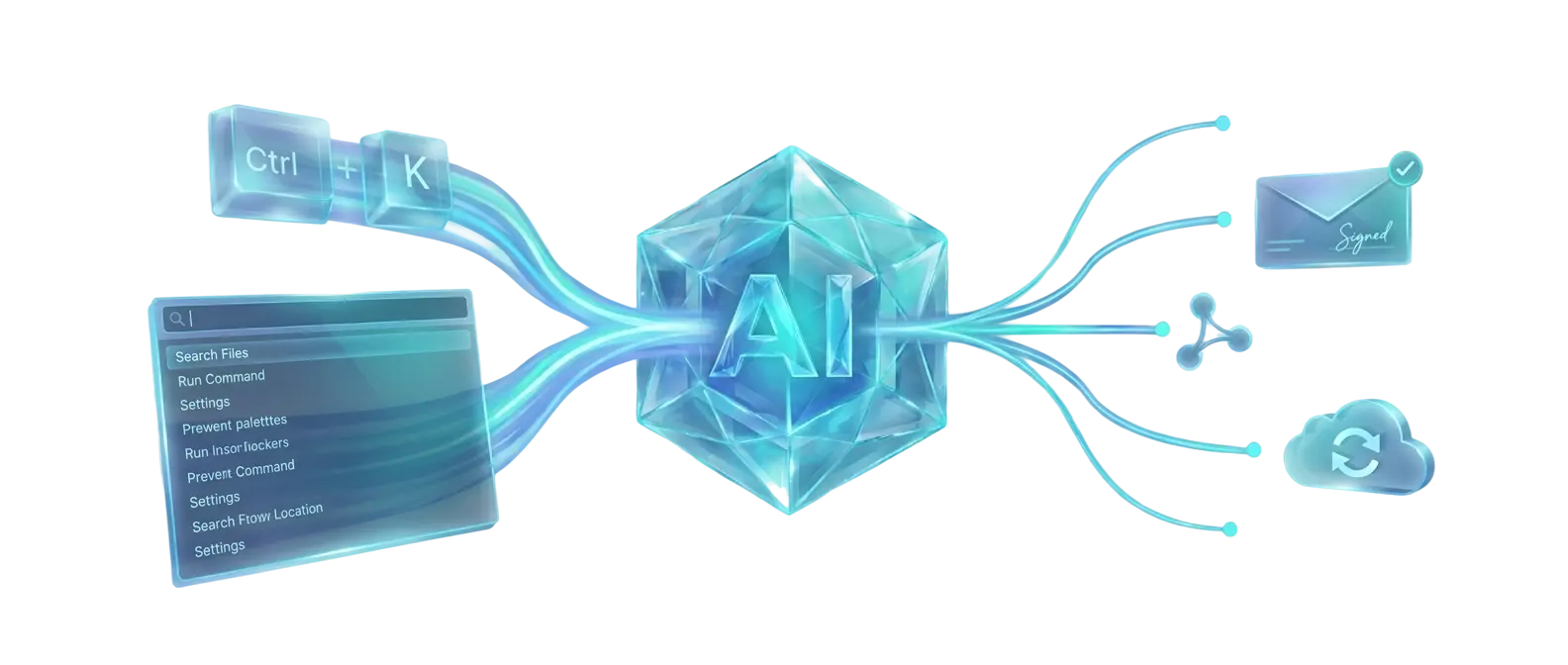
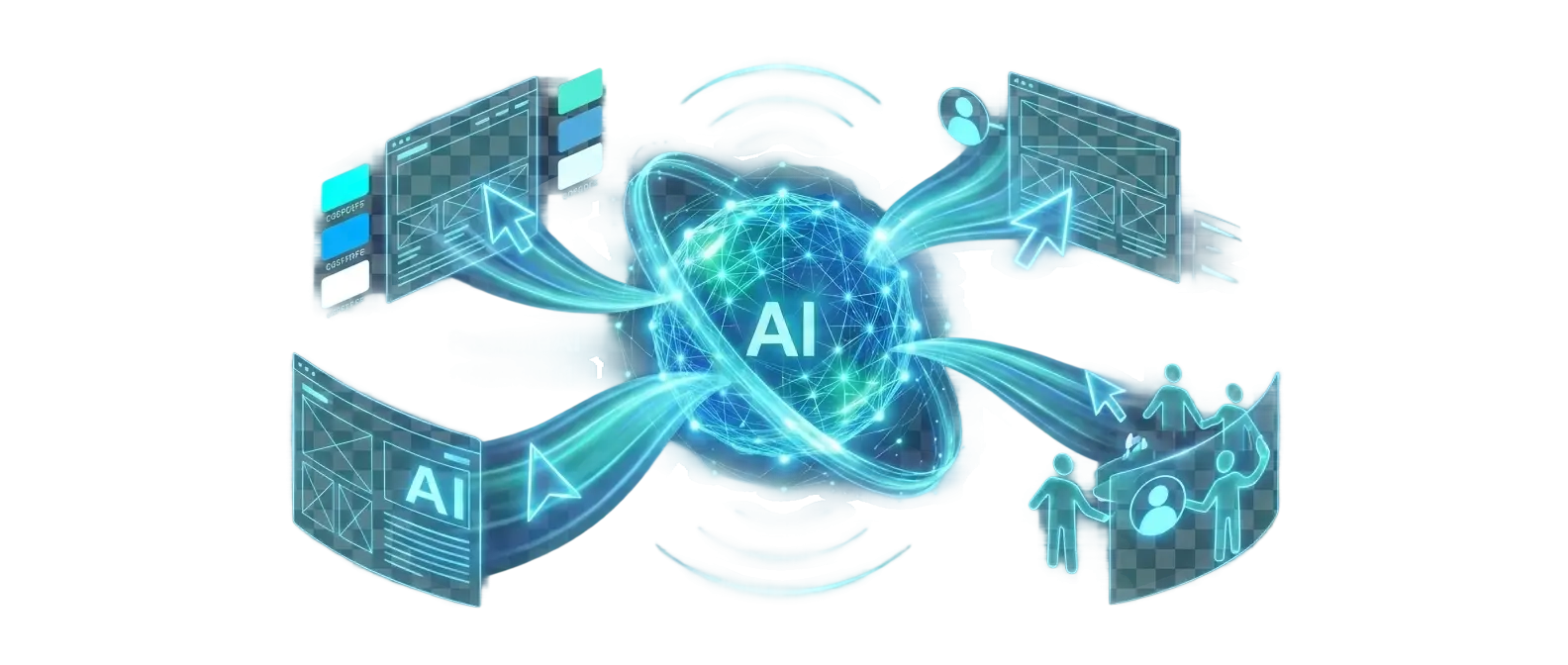
Accelerate content creation with built-in AI assistance

Generate on-brand visuals and media assets directly within your editorial workflow using integrated AI models

Maintain complete governance with draft workflows, granular version history, and one-click rollbacks across all pages

Global Growth & Visibility

translate.svg

Automated AI Localization & SEO

Translate full pages and content elements instantly with integrated DeepL AI, complete with automated hreflang tags and localized slugs.

analytics.svg

Gain valuable insights on-page

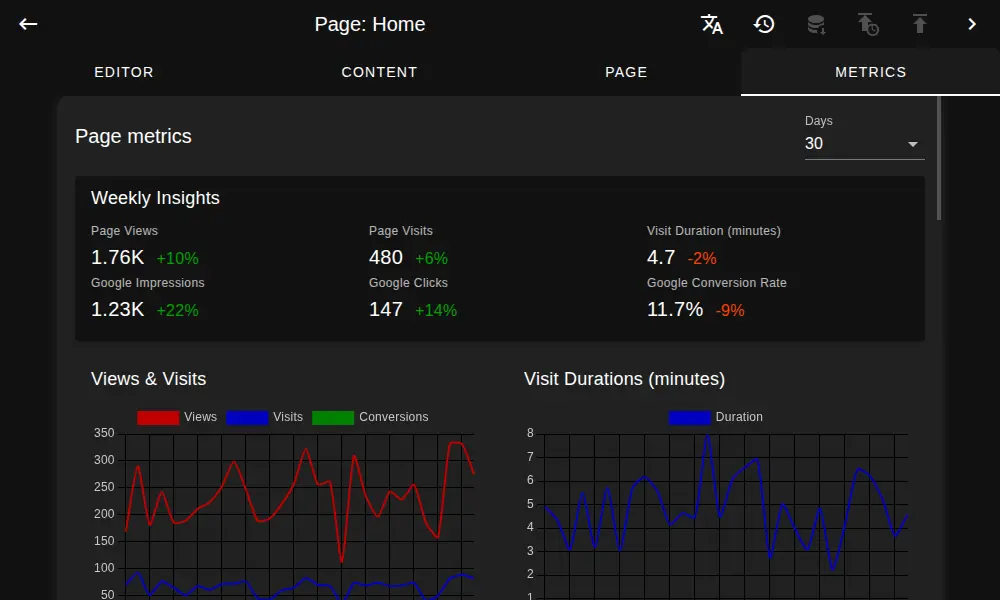
Leverage integrated on-page analytics to evaluate engagement and refine your content strategy.

search-web.svg

Optimize content and boost visibility

Monitor search impressions, query performance, and indexing status via native Google Search Console integration.

Intuitive Visual Editing & Administration

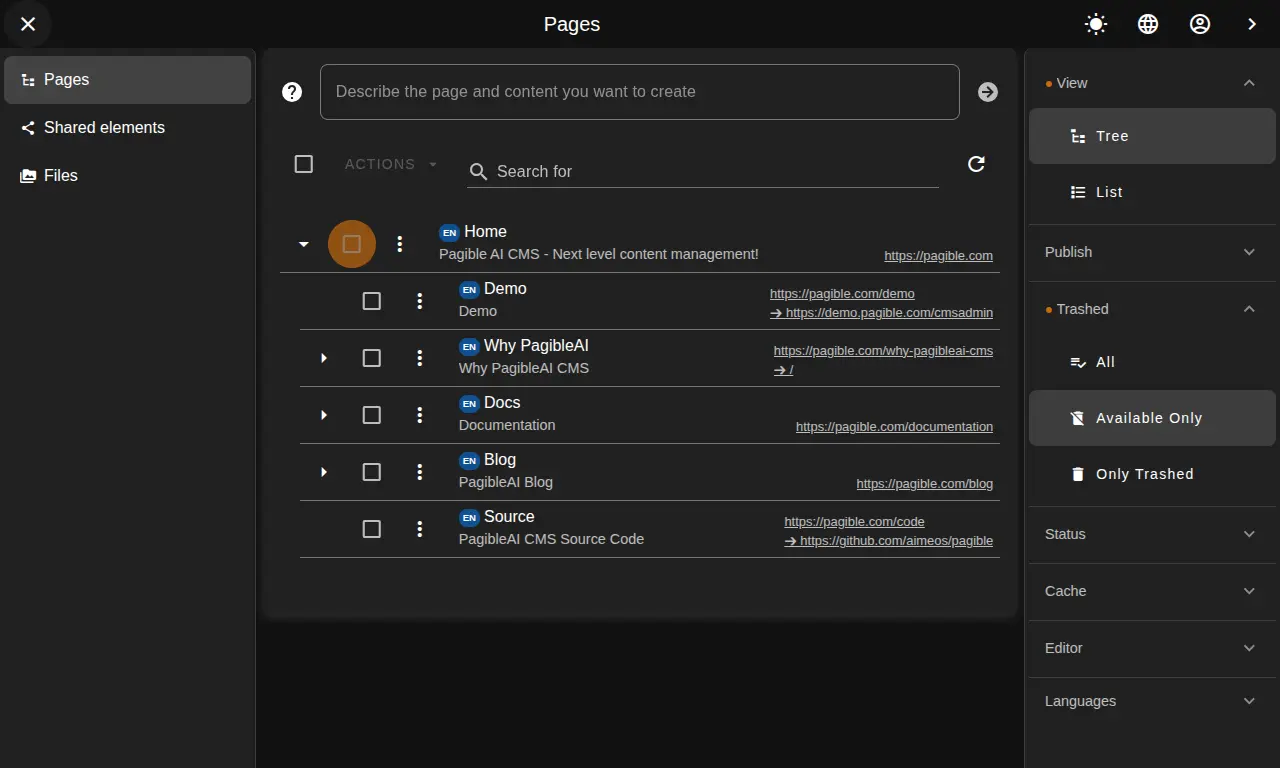
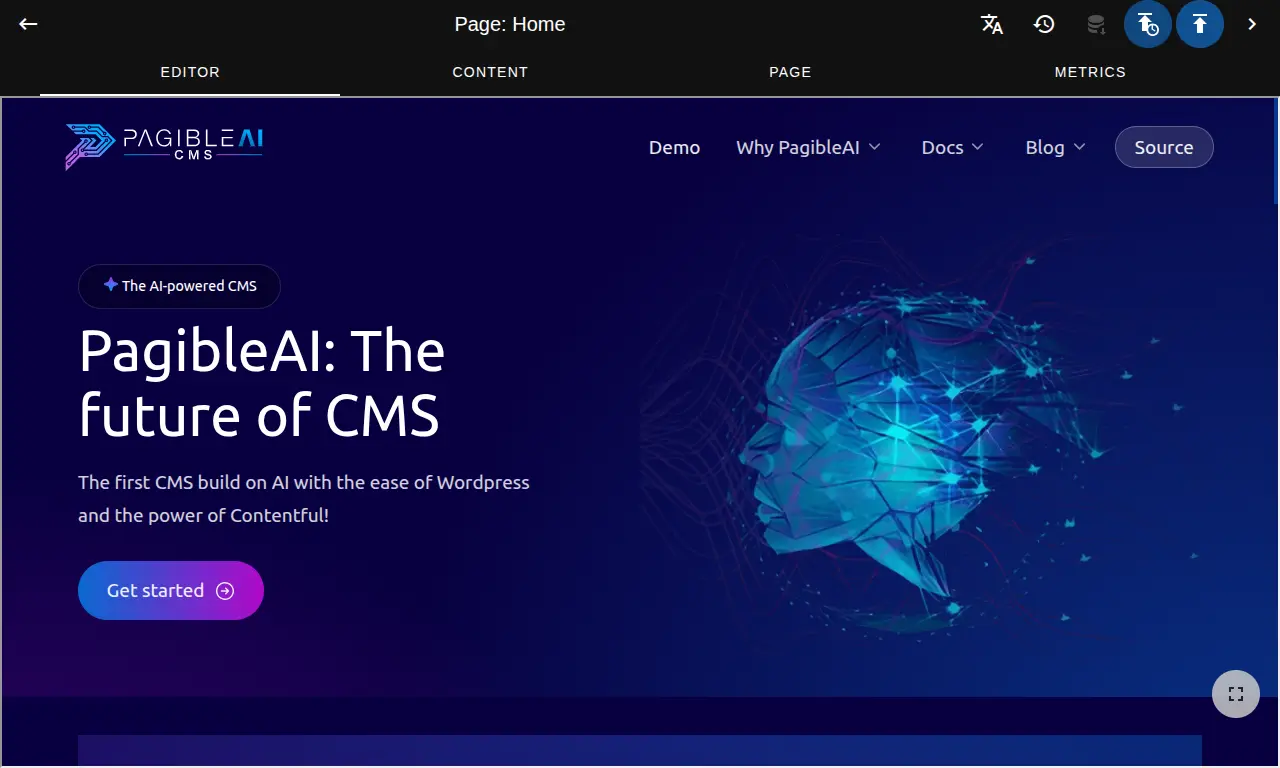
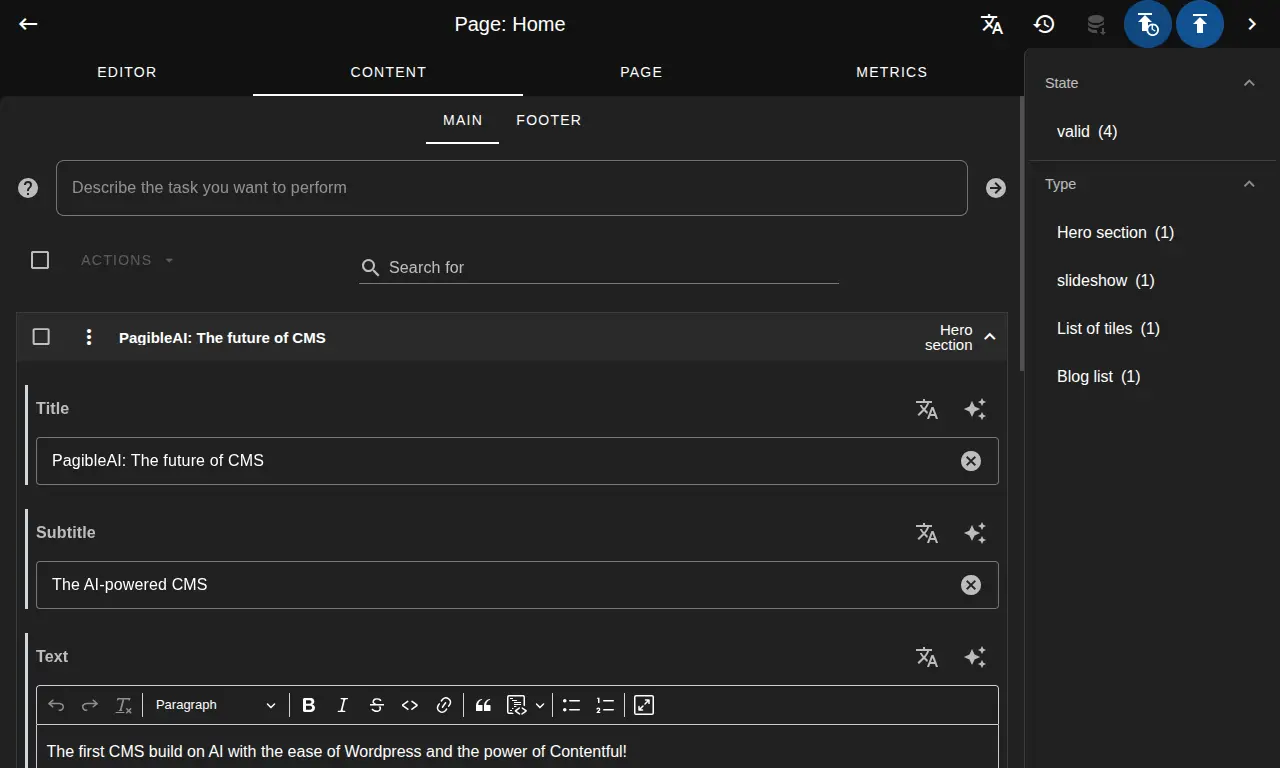
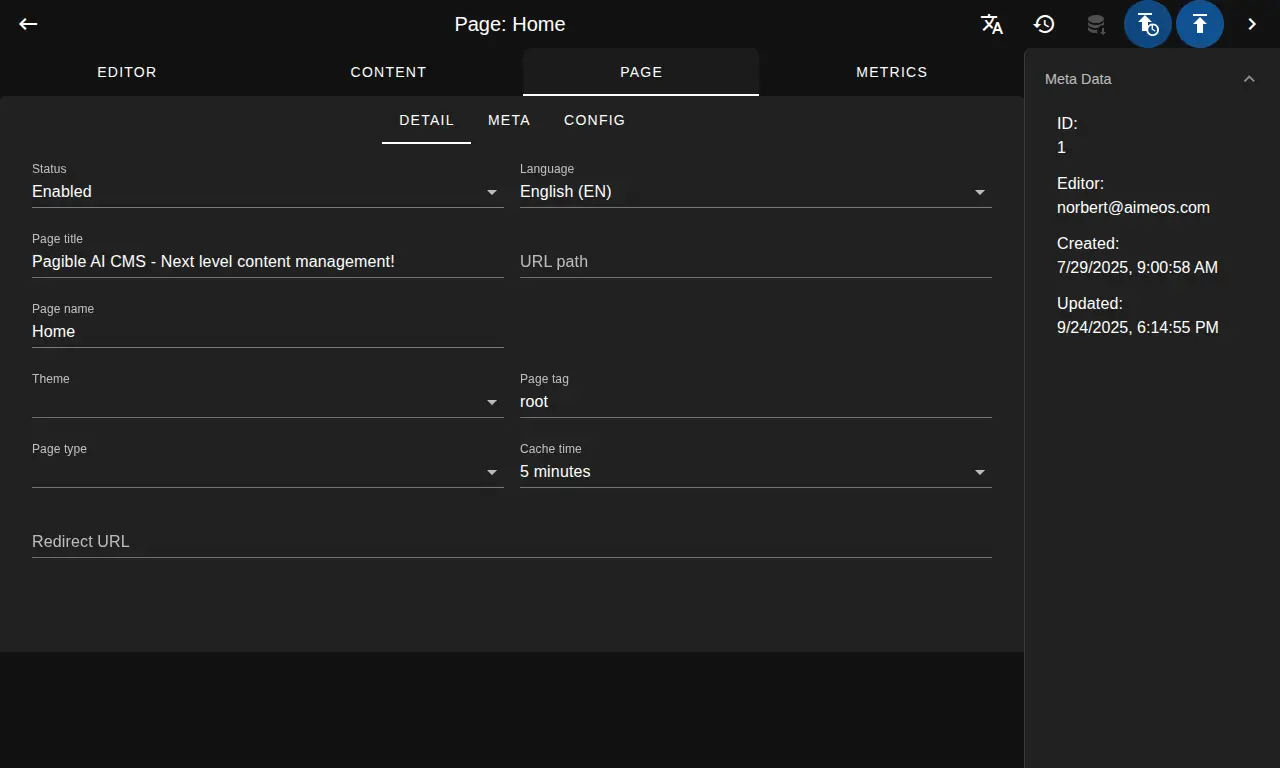
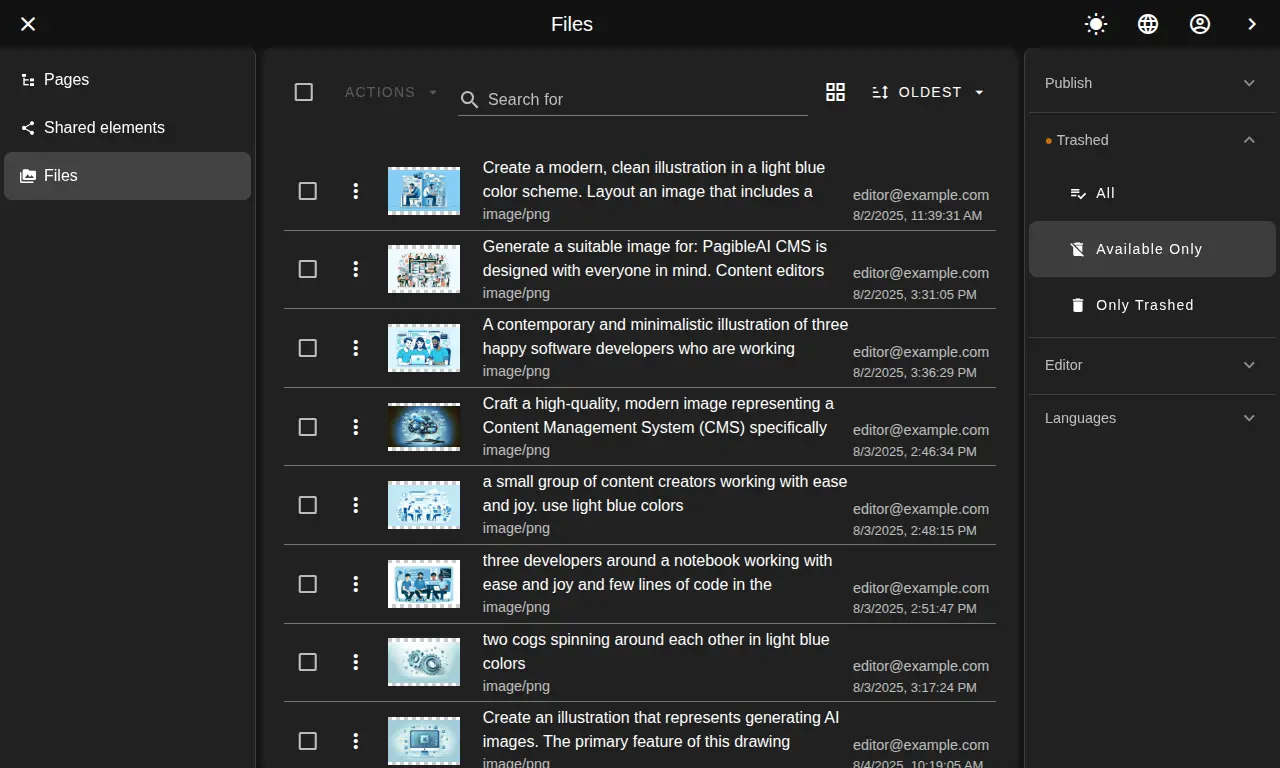
A content management system's page management interface, showing a hierarchical list of pages with search and filter options. PagibleAI CMS homepage, an AI-powered content management system. The image displays a Content Management System (CMS) interface for editing a "Home" page, showing fields for title, subtitle, and text content for a "Hero section" titled "PagibleAI: The future of CMS". It includes options for editing, content, page, and metrics, along with a sidebar filtering content types like "Hero section," "slideshow," "List of tiles," and "Blog list." Content management system page details and metadata. pagible-pages-metrics.png List of AI-generated images with descriptions.

Developer Quickstart: Up and Running in Seconds

Embed PagibleAI directly into any existing or new Laravel 11, 12, or 13 project with standard Composer and Artisan commands. No complex microservice setups—just clean, native PHP and Vue.js architecture.

Prerequisites: PHP 8.2+, Laravel 11 / 12 / 13, and MariaDB 11+ / MySQL 8+ / PostgreSQL 13+ / SQLite 3 / SQL Server 2017+.

composer require aimeos/pagible
php artisan cms:install

Explore our Step-by-Step Installation Guide for configuration options, asset publishing, and environment setup.

Discover PagibleAI for Developers

laravel.svg

Built on Laravel & VueJS

Get access to thousands of packages from the powerful and feature-rich Laravel and Vue.js ecosystems.

puzzle.svg

API or templates: Your choice

The hybrid approach offers first class API or traditional templates with themes for complete flexibility.

label-multiple.svg

Multi-domain support

Manage multiple websites from one CMS instance, streamlining your content management process.

Manage structured content for web, apps & print

Deliver high-throughput content with low-latency JSON REST APIs engineered for headless and omnichannel architectures

Leverage a structured GraphQL admin API to automate content operations across services and frontend channels

Enterprise Infrastructure & Security

cloud-check-variant.svg

Cloud-native architecture

Engineered for cloud elasticity across AWS, Google Cloud, Azure, and Kubernetes clusters.

scale.svg

Enterprise-grade scalability

Scales efficiently from SQLite setups to high-traffic enterprise clusters handling millions of requests.

open-source-initiative.svg

Open Source & Extensible

Retain complete code and data ownership with open-source transparency and zero vendor lock-in.

Why choose PagibleAI CMS?

Features
PagibleAI PagibleAI
Contentful Contentful
WordPress WordPress
AI-powered content
Supported
Paid add-on
Not supported
AI image editing
Supported
Not supported
Not supported
Audio transcription
Supported
Not supported
Not supported
MCP / AI tools
Supported
Not supported
Not supported
Ease of use
Supported
Not supported
Supported
API-first
Supported
Supported
Not supported
Structured content
Supported
Supported
Not supported
Content preview
Supported
complex
Supported
Multi-channel
Supported
Supported
Not supported
Multi-language
Supported
Supported
Not supported
Collaboration features
Supported
Supported
Supported
Real-time collaboration
Supported
Not supported
Not supported
Roles & permissions
Supported
Supported
Supported
Full-text search
Supported
Supported
Not supported
Learning curve
Supported
Not supported
Supported
Customizable
Supported
Not supported
Supported
Cloud-native
Supported
Supported
Not supported
Scalability
Supported
enterprise only
Not supported
Performance
Supported
Supported
Not supported
Costs
Supported
Not supported
Supported
No Vendor lock-in
Supported
Not supported
Supported
Open Source
Supported
Not supported
Supported

Frequently Asked Questions

What is PagibleAI CMS?

PagibleAI CMS is a high-performance hybrid content management system built natively for Laravel and Vue.js.

It integrates native AI assistance directly into editorial workflows—accelerating drafting, image generation, automated translations, and SEO optimization without sacrificing editorial control or data privacy.

Because it runs as a native Laravel package, engineering teams can embed it seamlessly into existing applications, host on their own infrastructure, and deploy multi-tenant setups with zero vendor lock-in.

How does PagibleAI compare to traditional CMSs?

Unlike legacy monolithic platforms or rigid headless-only systems, PagibleAI provides a hybrid architecture. Editors get visual WYSIWYG live previews, automated translation across 35+ languages, and in-context AI generation tools, while engineering teams benefit from native Composer installation, typed APIs (REST/GraphQL), and complete database ownership.

How does PagibleAI compare to Laravel Nova or Filament?

While admin panels like Filament and Laravel Nova excel at CRUD operations for database records, PagibleAI CMS is purpose-built for comprehensive digital content management. It delivers full visual WYSIWYG page building, nested hierarchical page routing, drag-and-drop element composition, automated AI translations, media asset handling, and SEO automation out of the box.

Does it support WYSIWYG?

Yes, but better! PagibleAI CMS combines frontend editing with WYSIWYG while creating or changing your content. Thus, you can see your new content in the frontend immediately after saving without any additional clicks.

Together with PagibleAI's draft and publish feature, you can update your page until it's perfect and only then, make it available to the public.

Is PagibleAI CMS headless?

Yes, PagibleAI CMS is designed with headless capabilities, providing both an exceptionally fast JSON REST API and a powerful GraphQL API for seamless content administration. However, we prefer to categorize it as an API-first CMS.

This distinction highlights that while it offers robust API access for ultimate flexibility, it also provides server-side page rendering. This unique feature removes the necessity to build a separate front-end application from scratch, simplifying and accelerating development.

Can PagibleAI be used with modern frontend frameworks like Next.js or Nuxt?

Yes. PagibleAI is a true API-first hybrid CMS. You can consume your structured content via high-speed JSON REST APIs or GraphQL to power headless web frontends (Next.js, Nuxt, SvelteKit, Astro), native mobile apps (iOS/Android), and digital signage—or leverage built-in Blade and theme rendering for lightning-fast server-rendered websites.

How scalable is PagibleAI CMS?

PagibleAI CMS is engineered for high-throughput enterprise environments. It scales from single-node instances using SQLite or MySQL up to distributed multi-node enterprise clusters on Kubernetes.

With optimized query caching, clean database schema design, and asynchronous asset processing, PagibleAI maintains sub-100ms response times and scales reliably under enterprise-grade traffic volumes.

Is PagibleAI CMS cloud-ready?

PagibleAI is fully cloud-native and stateless-ready. It deploys seamlessly across AWS, Google Cloud Platform, Microsoft Azure, and containerized Kubernetes environments.

With native support for cloud object storage (S3, GCS), distributed Redis caching, and zero-downtime deployment pipelines, it fits directly into modern enterprise DevOps workflows.

Modernize Your Content Infrastructure

Empower your editorial team with visual AI workflows while giving developers the native Laravel architecture they love.