Take back control of your database, templates, and budget

Self-Hosted PHP Alternative to Contentful

Traditional SaaS CMS platforms lock you in with restrictive seat limits and high costs. PagibleAI CMS is an open-source, Laravel-based headless CMS that gives you absolute database control, unlimited scale, and a built-in live-preview builder.

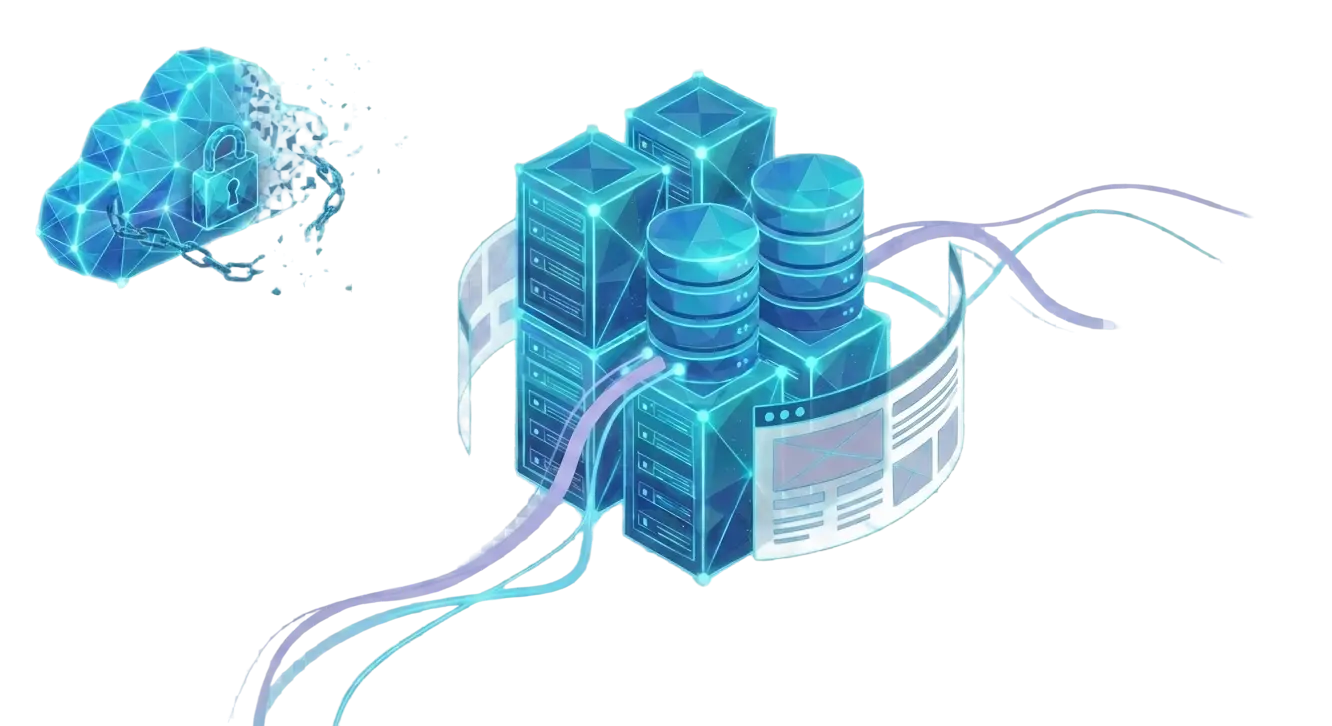
A transparent low-poly AI hero illustration showing a self-hosted PHP and Laravel CMS stack replacing a locked SaaS content platform with owned database, APIs, and private infrastructure.

Why PHP Teams Are Escaping the Contentful SaaS Trap

While SaaS headless options like Contentful work fine for quick API configurations, they introduce severe operational friction for engineering teams running PHP or Laravel infrastructure. Every database request travels over external networks, adding latency. Worse, you are locked into proprietary data structures and hit tier limits on locales, environments, and team size.

By moving to a self-hosted PHP CMS, you leverage your existing server stacks, enjoy instant native database queries, and control your deployment environments under standard open-source licenses.

SaaS Headless vs. Self-Hosted PHP Headless

Publishers section icon

Zero API Latency

Retrieve layout schemas and localized text elements directly within your application stack or deploy a high-speed private CDN. No external platform request timeouts.

Works with any database icon

Absolute Database Control

Your content lives in your own MariaDB, MySQL, PostgreSQL, SQLite, or SQL Server database. Run migrations, backup datasets, and query schemas directly without API limiters.

Queue workers icon

Familiar Laravel Architecture

Fully compatible with Eloquent ORM, Blade templating, routing configurations, and native middleware. No need to learn a foreign SaaS ecosystem.

Side-by-Side Comparison: Self-Hosted PHP vs. Contentful vs. Strapi

Capability
PagibleAI PagibleAI CMS
PagibleAI Contentful
PagibleAI Strapi
Hosting Model
Self-hosted on your infrastructure or cloud
Locked to Contentful cloud networks
Self-hosted on your servers or Strapi Cloud
Database Ownership
100% yours (PostgreSQL, MySQL, MariaDB, SQLite, SQL Server)
Proprietary managed cloud databases
100% yours
Extensibility
Laravel middleware, custom PHP providers & classes
Restricted UI Extensions & webhooks only
Custom JavaScript/TypeScript APIs, plugins & middlewares
Licensing
Open source (MIT) with zero user limits
Proprietary monthly subscription per seat
Open source (MIT) with optional commercial enterprise seat limits
Page Previews
Real-time, in-context drag-and-drop live editor
External visual configuration setup required
Preview API integrations & custom draft content URLs
API Payload Speed
Microsecond from cache / Milliseconds for rendering pages
Variable external HTTP request latency
Depends on hosting architecture
Cost & Scale Limits
MIT License. Unlimited users, locales, environments, and records with zero software costs.
Strict tier-based pricing with escalating costs for extra users, locales, or records.
Free community edition, but charges per seat for advanced roles/permissions (RBAC).
Offline Development
100% offline-ready. Runs locally using standard tools (SQLite, Herd, Valet).
Impossible. Completely dependent on cloud APIs and active internet connection.
Offline-capable locally, but sharing database schemas across dev teams is complex.
Asset Hosting Costs
Store media locally or in your private S3. Zero platform transfer fees or bandwidth limits.
Hosted on Contentful servers with strict bandwidth caps and expensive overage fees.
Self-hosted, but media optimization and resizing requires custom plugins or CPU-heavy Node handlers.
Laravel & PHP Synergy
Native Eloquent ORM, Blade templates, and routing. Zero serialization overhead.
Requires HTTP requests, API clients, and complex mapping to PHP objects.
Requires HTTP client wrappers, custom parser classes, and Node-to-PHP serialization.
Deep-Dive Advantages of a Modern PHP Headless Stack

create a suitable image in the style of the reference images for:

PHP powers over 75% of the web, meaning headless PHP stacks offer an unmatched, mature ecosystem of libraries, frameworks, and expert developers. Instead of retraining your team on a

Developer Familiarity and Ecosystem Longevity

PHP powers over 75% of the web, meaning headless PHP stacks offer an unmatched, mature ecosystem of libraries, frameworks, and expert developers. Instead of retraining your team on a complex, constantly shifting JavaScript-only backend environment, you can build on stable, battle-tested PHP architectures like Laravel/Symfony. This ensures faster onboarding, simpler long-term maintenance, and seamless integration with existing business-critical databases and workflows.

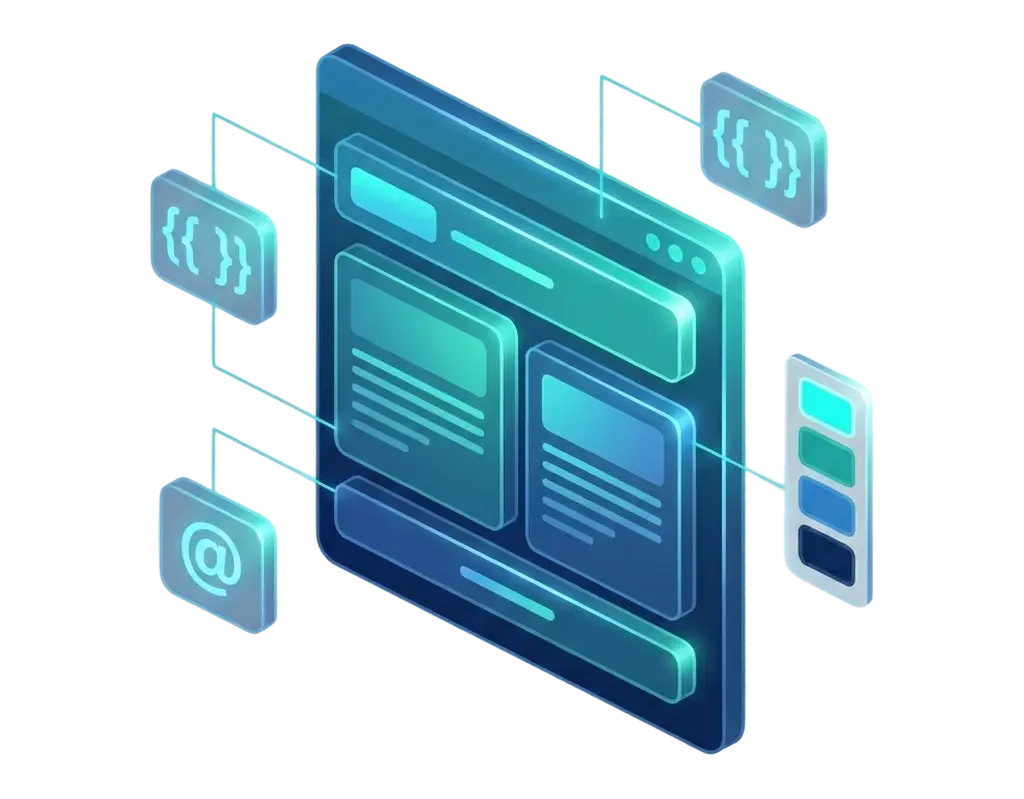
Blade templates and themes: a 3D webpage assembled from layout blocks with double-curly-brace template tags and theme color swatches, blue and teal

Hybrid Headless Power

Traditional headless platforms force your front-end team to write heavy client-side JavaScript apps just to consume simple paragraph blocks. PagibleAI CMS bridges the gap by offering a hybrid layout. You can output content instantly as JSON payloads using standard REST JSON:API, or load them natively inside your standard Laravel Blade layout templates.

This gives your PHP developers the freedom to build robust, server-side rendered (SSR) pages that achieve perfect 100/100 Google Lighthouse Core Web Vitals with zero overhead.

A glowing 3D security shield with a padlock emblem, connected by cyan lines to a protected system, blue and teal

High-Performance Enterprise Security

Your CMS shouldn't be the weakest link in your security chain. Hosting PagibleAI CMS inside your private VPC means your back-office database is protected by standard firewalls, secure SSH keys, and native Laravel security layers. Unlike SaaS platforms that expose public endpoints to edit your layout structures, you can completely isolate your editing cockpit from public traffic while serving read-only content safely through secure local microservices.

Frequently Asked Questions

Everything you need to know about PHP-native Headless CMS

Is PagibleAI CMS faster than Contentful?

Yes, when hosted locally or within the same VPC as your web application, database query speeds are measured in microseconds rather than external network milliseconds. You completely bypass the external API roundtrips and platform rate limiters that slow down dynamic page loads.

What are the server requirements for PagibleAI CMS?

Because it's built on Laravel, it runs anywhere PHP is supported: standard VPS nodes, AWS EC2, DigitalOcean droplets, Laravel Forge, Plesk, or standard Linux Apache/Nginx web servers running PHP 8.2+.

Do I lose headless capabilities with a PHP-native option?

Absolutely not. PagibleAI CMS is fully decoupled. It outputs fully compliant, structured JSON payloads through its standardized JSON:API and GraphQL layers. You can fuel standard Next.js, Nuxt, or mobile applications just like you would with Contentful, while enjoying local control of the CMS core.

How does the license work?

PagibleAI CMS is distributed under the MIT license. You can download, host, modify, and integrate it into commercial projects completely free, with no licensing limits on pages, localization, or admin users.

How do content updates and publishing workflows work?

PagibleAI CMS features a draft-to-publish system coupled with a real-time visual visual builder. Changes are immediately visible in your local staging site and can be programmatically pushed to production, purging CDN caches instantly.

Is there an easy way to migrate our existing data from Contentful?

Yes, standard export files from Contentful are represented in JSON format, which can be cleanly imported into PagibleAI CMS using native PHP scripts or database migration tools without data loss.

Start building with the ultimate PHP alternative to Contentful.

Ditch the SaaS Limits. Host Your Own CMS.

Take control of your publishing workflows, eliminate user-seat restrictions, and optimize your application's loading speed with a self-hosted PHP headless CMS.